

One of the most common design questions we hear is: “Can I mix different wood tones in the same space?” The short answer? Absolutely. In fact, mixing wood tones is one of the easiest ways to add depth, warmth, and visual interest to a room. Using only one wood tone throughout can sometimes make a space feel flat and one-dimensional, while a thoughtful mix feels curated, layered, and quietly luxurious.
But, of course, there’s a fine line between intentional layering and a look that feels mismatched. The good news? With a few simple guidelines, you can create a beautifully balanced home with mixed wood tones that feel harmonious rather than clashing.
Here are four Quiet Luxe tips for blending wood tones with ease:
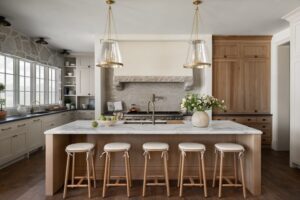
Start with Your Dominant Wood Tone
Before adding new pieces, take a moment to notice what wood tones already define the space. Often, your dominant tone will come from something substantial—like flooring, cabinetry, or a dining table. If you don’t have a major wood finish, your largest furniture piece (a console, coffee table, or bed frame) usually sets the tone.
This “anchor” tone will guide the rest of your decisions, helping each new piece feel intentional and connected.
Pay Attention to Undertones
Once you know your anchor tone, look closer at its undertones. Is it warm—like natural oak, walnut, or cherry? Or does it lean cooler—like a charcoal stain, ash, or driftwood grey?
Staying within the same family of undertones is the easiest way to create a cohesive flow. Warm woods naturally play well together, and the same goes for cool tones. But don’t be afraid to break the rule—sometimes a subtle contrast can create the most interesting, layered result.
Use Contrast to Add Depth
If everything in a room is the same tone, it can feel too “matchy” and flat. Mixing a light, airy oak piece with a deeper walnut or espresso finish instantly adds dimension.
When we introduce contrast, we like to keep it intentional and bold—pairing light and dark rather than mixing several mid-tones that might compete with one another. The key is to create a sense of rhythm rather than randomness.
Creating a Harmonious Balance
At Quiet Luxe Home, we love the character that mixed wood tones bring to a space. It’s a way to celebrate the natural beauty of each piece without feeling forced or overly coordinated. With a little intention—anchoring your dominant tone, considering undertones, embracing contrast, and softening with neutrals—you can create a layered look that feels effortless, elevated, and deeply inviting.
Because the beauty of quiet luxury lies in the details that don’t shout but still speak volumes.


